Why Does Groundnut Oil Cost More Than Regular Cooking Oils? What Should You Know?
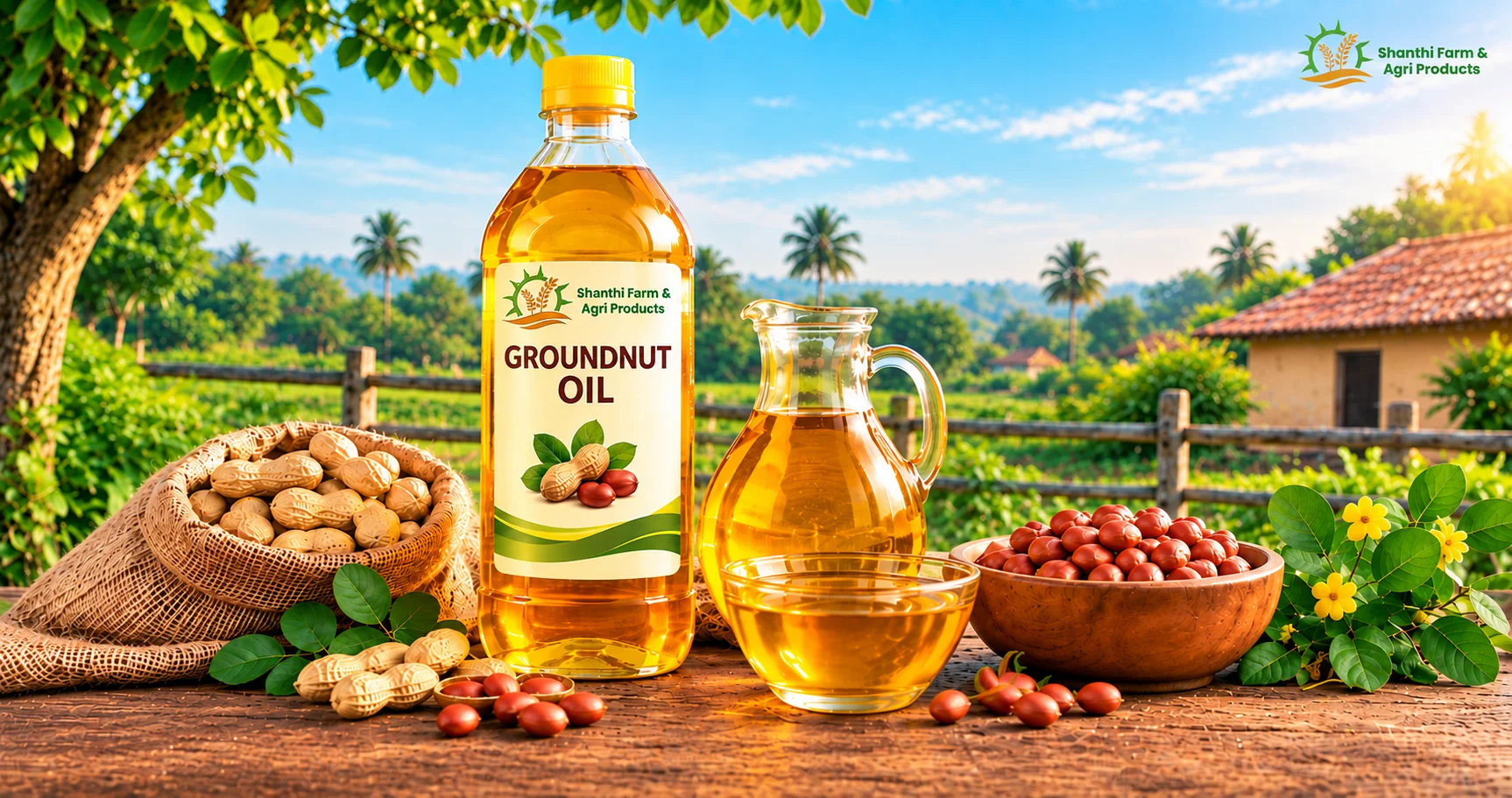
Groundnut oil is increasingly preferred by consumers who want a traditionally processed cooking oil with a distinct nutty flavour and carefully maintained natural characteristics. But one common question is: Why does groundnut oil cost more than regular cooking oils?
The answer depends on several factors, including the quality of the raw materials, extraction method, processing practices, oil yield, production time, packaging, storage, and the care taken to maintain product quality.
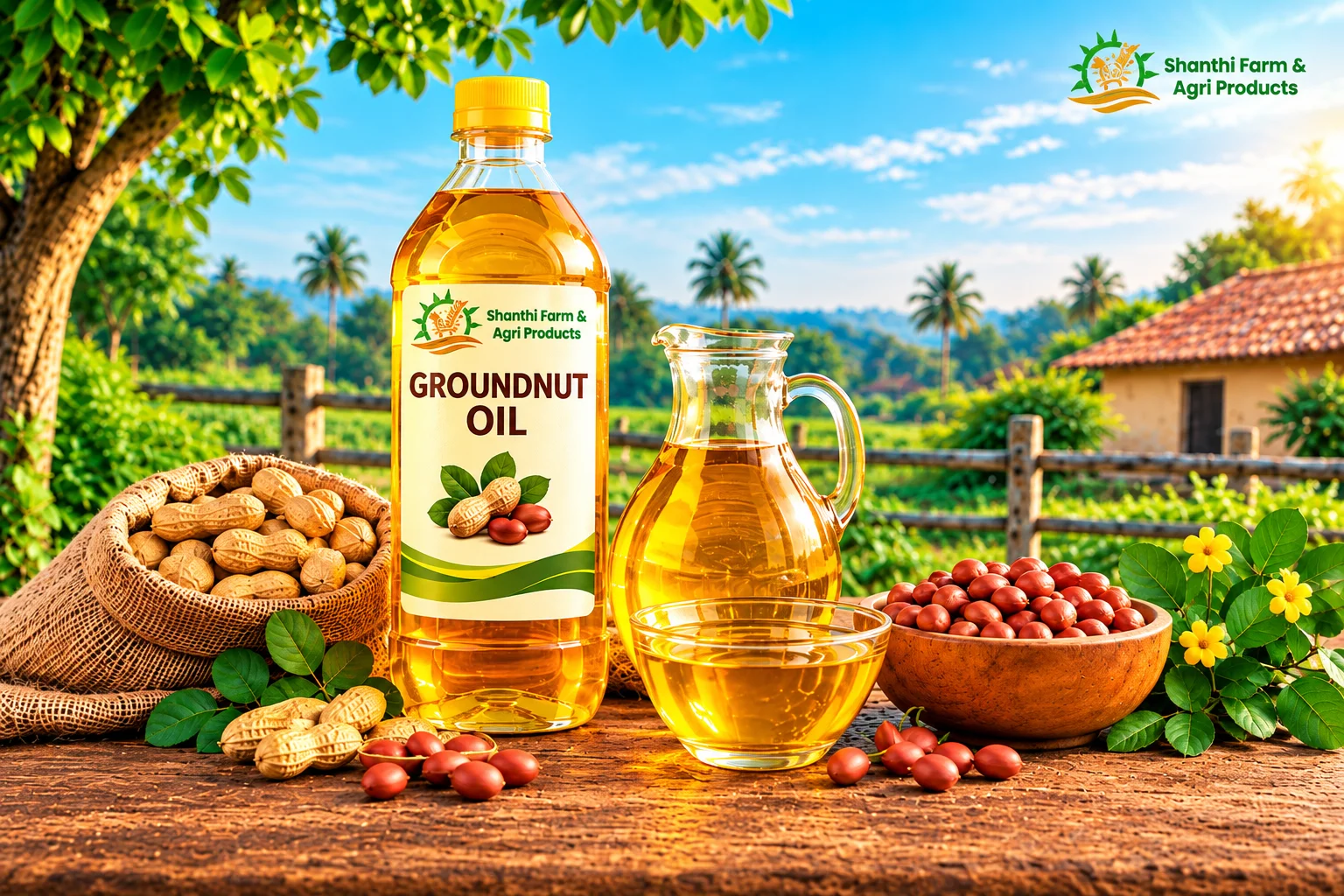
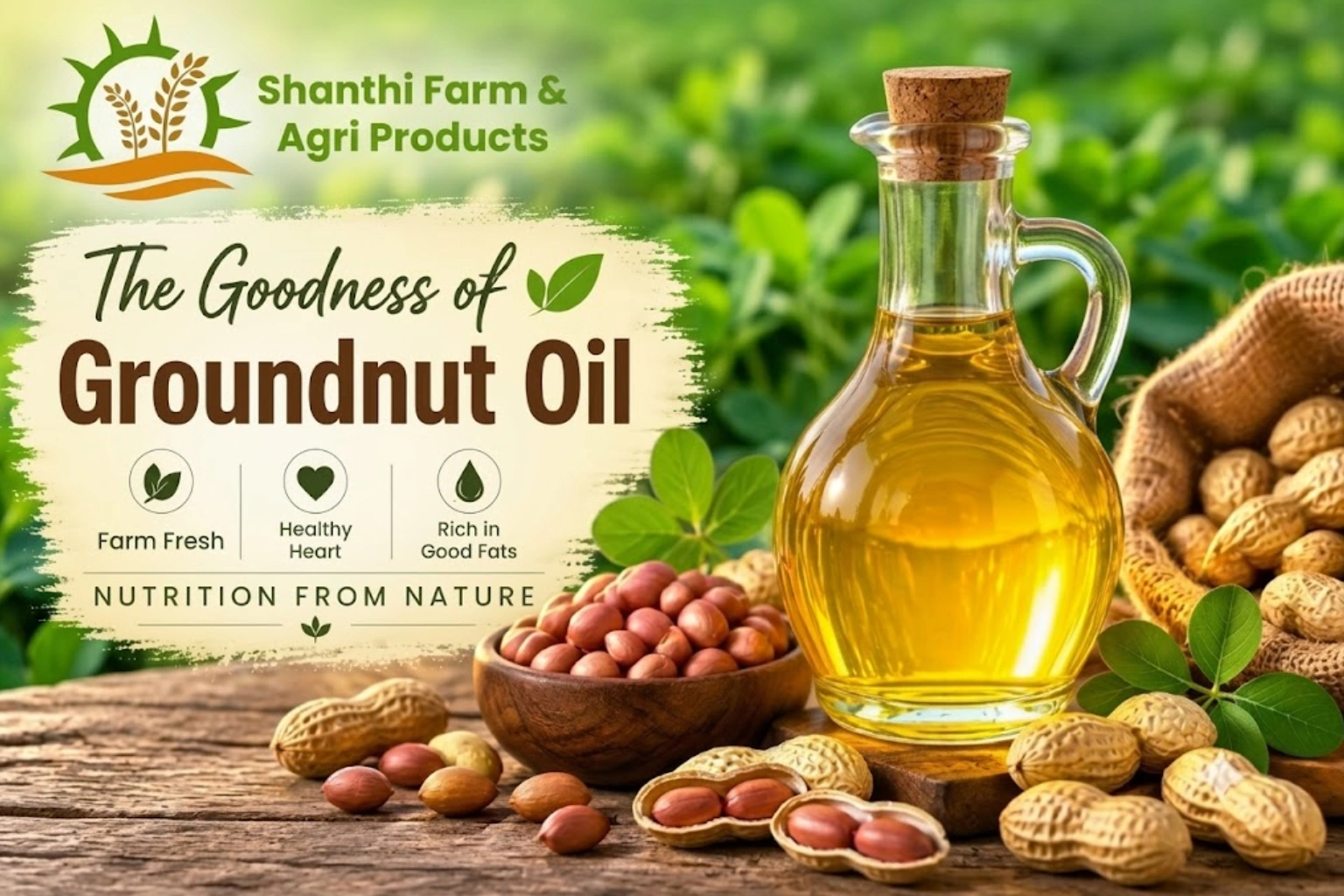
At Shanthi Farm Agri Products, we focus on providing quality groundnut oil made from carefully selected groundnuts. The oil is produced through a mechanical extraction process that focuses on maintaining the natural characteristics of the groundnuts while ensuring proper filtration and handling.
One important factor behind the cost of groundnut oil is the amount of oil obtained from the raw material.
Approximately 100 kg of top-grade groundnuts can produce around 40–45 kg of edible groundnut oil, depending on the quality and oil content of the groundnuts and the efficiency of the extraction process. The remaining material becomes groundnut oil cake or residue, which can have further uses.
For consumers comparing groundnut oil with refined cooking oil, price should therefore be considered together with the processing method, raw-material quality, oil yield, flavour, packaging, and intended use.
What Makes Groundnut Oil More Expensive?
The production of groundnut oil involves several factors that can influence its cost compared with conventional refined cooking oils. The process generally relies on carefully selected groundnuts and mechanical extraction, followed by suitable filtration and handling.
1. Selection of Quality Groundnuts
The quality of the final oil begins with the quality of the groundnuts. Top-grade groundnuts with suitable oil content are selected to obtain good-quality edible oil.
Poor-quality, damaged, mould-affected, or improperly stored groundnuts can negatively affect the quality of the finished product. Careful sourcing, cleaning, and sorting therefore add to production costs.
2. Lower Oil Yield Compared with the Total Raw Material
Mechanical extraction does not mean that every kilogram of groundnut becomes oil. Groundnuts contain solids and other components that remain as oil cake after extraction.
As a practical example:
100 kg of top-grade groundnuts → approximately 40–45 kg edible groundnut oil + approximately 55–60 kg groundnut oil cake/residue.
The actual yield can vary according to groundnut variety, moisture content, oil content, seed quality, and extraction conditions.
This means a significant quantity of agricultural raw material is required to produce a comparatively smaller quantity of edible oil.
3. Mechanical Extraction
Groundnut oil can be produced through mechanical extraction, where suitable groundnuts are processed to release the oil.
This method requires attention to raw-material preparation, extraction conditions, filtration, storage, packaging, and handling. Each stage can contribute to the overall production cost.
4. Careful Processing and Filtration
Groundnut oil requires suitable processing and filtration to maintain its quality and remove unwanted suspended particles.
Proper handling after extraction is also important. Filtration, storage, packaging, and quality checks require time, equipment, and careful attention.
5. Smaller-Scale or Quality-Focused Production
Production scale can also influence the final price of groundnut oil.
Manufacturing oil with attention to raw-material selection, controlled extraction, filtration, packaging, and quality handling may involve higher per-unit costs than large-scale commodity oil production.
For buyers, this helps explain why groundnut oil prices may be higher than the prices of some regular refined cooking oils.
Features and Benefits of Groundnut Oil
Groundnut oil offers several characteristics that make it an appealing option for households, food businesses, retailers, and consumers interested in traditionally processed cooking oils.
Key Features
-
Mechanical Extraction: Produced by mechanically extracting oil from selected groundnuts.
-
Quality Groundnuts: Carefully selected raw materials can contribute to consistent oil quality.
-
Traditional Processing Approach: Uses a processing method associated with traditional oil extraction.
-
Distinctive Nutty Character: Groundnut oil naturally has a characteristic aroma and flavour.
-
Filtered Oil: Appropriate filtration helps remove suspended particles from the extracted oil.
-
Versatile Cooking Oil: Can be used for a variety of everyday culinary applications.
-
Careful Handling: Proper storage and packaging help maintain product quality.
-
Agricultural Raw Material: Produced from groundnuts, an important oilseed crop.
-
Oil-Cake Utilization: The solid material left after extraction can have applications depending on its quality and intended use.
-
Suitable for Quality-Conscious Consumers: An option for people comparing traditionally processed and refined cooking oils.
Potential Benefits for Consumers
1. Distinctive Taste and Aroma
Groundnut oil can provide a characteristic groundnut flavour and aroma that many consumers associate with traditionally extracted oils.
This can be particularly suitable for recipes where the natural character of the cooking oil complements the food.
2. Traditional Extraction Method
Mechanical extraction is one of the major differences between traditionally processed groundnut oil and heavily refined cooking oils.
Consumers interested in traditional oil-processing methods may prefer groundnut oil produced using mechanical extraction.
3. Useful for Everyday Cooking
Groundnut oil is commonly used in different culinary applications.
Depending on individual cooking requirements and the product's recommended use, it can be used for sautéing, frying, roasting, and other food-preparation methods.
4. Focus on Raw-Material Quality
Quality groundnut oil begins with suitable groundnuts.
Selecting, cleaning, sorting, and properly handling good-quality raw material are important steps in producing consistent oil.
5. Transparent Understanding of Yield
Knowing the approximate yield helps customers understand why groundnut oil can be more expensive.
When 100 kg of quality groundnuts produces approximately 40–45 kg of edible oil, the cost of the raw material forms a significant part of the finished product price.
6. Choice for Traditional-Oil Consumers
People looking for groundnut oil, premium groundnut oil, natural cooking oil, or traditional cooking oil may consider groundnut oil as an alternative to highly processed cooking oils.
Technical Specifications, Production Process and Buying Considerations
Understanding the technical side of production makes it easier to compare groundnut oil with other cooking oils.
Technical Specifications
-
Product: Groundnut Oil
-
Primary Raw Material: Quality groundnuts/peanuts
-
Extraction Method: Mechanical extraction
-
Typical Oil Yield: Approximately 40–45 kg edible oil from 100 kg of top-grade groundnuts
-
Remaining Material: Approximately 55–60 kg groundnut oil cake/residue
-
Oil Type: Edible vegetable oil
-
Natural Character: Characteristic groundnut aroma and flavour
-
Processing: Mechanical extraction followed by suitable filtration and handling
-
Application: Household cooking, food preparation, frying, sautéing, and related culinary uses
-
Packaging: Packaging format may vary according to product availability and requirements
-
Storage: Store in a cool, dry place away from direct sunlight and excessive heat
-
Raw-Material Quality: Yield and oil characteristics can vary according to groundnut variety, moisture, oil content, and quality
-
Production Yield: Not a fixed percentage; actual output can vary between batches
How Is Groundnut Oil Made?
The production process generally starts with the selection and preparation of suitable groundnuts.
The groundnuts are cleaned to remove unwanted foreign material and are then prepared for mechanical extraction.
During extraction, the groundnuts are mechanically processed to release the oil. The extracted oil is then subjected to appropriate filtration or settling to remove unwanted suspended particles.
The final oil is handled and packed under suitable conditions.
A simplified process can be represented as:
Quality Groundnuts → Cleaning & Sorting → Preparation → Mechanical Extraction → Oil Separation → Filtration → Storage & Packaging
This process differs from the multi-stage refining route commonly associated with refined edible oils.
Groundnut Oil vs Refined Cooking Oil
The two products can differ considerably in their production approach.
Groundnut Oil
-
Uses mechanical extraction.
-
Focuses on maintaining the natural characteristics of the oil.
-
Uses selected groundnuts as the primary raw material.
-
Has a characteristic groundnut aroma and flavour.
-
May have a higher production cost per unit.
-
Appeals to consumers seeking traditionally processed cooking oils.
Refined Cooking Oil
-
Typically undergoes multiple processing stages.
-
Processing is designed to produce consistent characteristics and remove various components.
-
Can be manufactured at large industrial scale.
-
May have a relatively lower consumer price depending on the oil type, market conditions, brand, and production scale.
Therefore, why is groundnut oil more expensive than refined oil?
It is not simply because of the product name. The price reflects the combined cost of suitable raw materials, oil yield, mechanical extraction, processing, filtration, packaging, storage, and quality management.
What Should You Check Before Buying Groundnut Oil?
When selecting groundnut oil in Hyderabad or elsewhere, consumers can consider:
-
Raw-material quality
-
Extraction method
-
Product labelling
-
Packaging condition
-
Manufacturing and expiry/best-before information
-
Storage instructions
-
Batch information
-
Seller or manufacturer's reputation
-
Appropriate food-quality and regulatory information
-
Whether the product matches the intended cooking application
For buyers comparing groundnut oil manufacturers and groundnut oil suppliers in Hyderabad, understanding the production process can help them make a more informed comparison.
At Shanthi Farm Agri Products, our focus is on providing quality agricultural and edible-oil products while giving customers a clear understanding of what goes into their chosen product.
Why Choose Shanthi Farm Agri Products?
Shanthi Farm Agri Products focuses on quality-oriented agricultural products and customer requirements.
For consumers looking for quality groundnut oil, understanding the source, extraction process, approximate yield, and handling practices is an important part of making an informed purchase.
Our approach emphasizes:
-
Quality-focused raw-material selection
-
Mechanical extraction methodology
-
Careful oil handling
-
Appropriate filtration
-
Product quality and consistency
-
Transparent communication
-
Customer-focused service
-
Reliable agricultural product sourcing
Whether you are a household consumer, food business, retailer, or bulk buyer, understanding how groundnut oil is produced can help you evaluate its price beyond simply comparing the number on the label.
Frequently Asked Questions About Pure Ghee
1. Why does groundnut oil cost more than regular cooking oil?
Groundnut oil can cost more because it uses selected groundnuts, mechanical extraction, and quality-focused processing.
Approximately 100 kg of top-grade groundnuts can produce around 40–45 kg of edible oil, while the remaining material becomes oil cake or residue. Raw-material cost, yield, processing, filtration, packaging, and handling all contribute to the final price.
2. How much oil can be obtained from 100 kg of groundnuts?
Approximately 40–45 kg of edible groundnut oil can be obtained from 100 kg of top-grade groundnuts under suitable conditions.
The actual yield is not fixed and can vary according to groundnut variety, oil content, moisture level, seed quality, and extraction conditions.
3. Is groundnut oil different from refined groundnut oil?
Yes. The primary difference is the processing method.
Groundnut oil produced through mechanical extraction follows a different production process from refined groundnut oil, which generally undergoes additional refining stages.
These different processing approaches can affect the oil's characteristics, processing cost, flavour, and appearance.
4. What are the main uses of groundnut oil?
Groundnut oil can be used for various culinary applications, including everyday cooking, sautéing, roasting, and frying, depending on consumer preferences and the specific product's recommended use.
5. How should groundnut oil be stored?
Keep the oil tightly closed and store it in a cool, dry place away from direct sunlight and excessive heat.
Looking for Groundnut Oil?
Explore Shanthi Farm Agri Products and discover our range of groundnut oil, made with carefully selected groundnuts for quality and authentic taste.
🌐 Website: https://shanthifarmagriproducts.co.in/
Shanthi Farm Agri Products — Quality for Your Family